01 · The Perspective
Pressing the button, and waiting
The story below is illustrative, built from the patterns in our sources. It is not about a real person.
Kavya takes the bus home from a late pharmacy shift. One rainy night the bus is nearly empty, and a man who boarded with her moves to the seat beside her. She presses the red panic button and holds it.
In the command centre, her alert joins a list. Above it: a school bus where a child pressed the button, a cab driver testing a new device, a passenger who leaned on a pole at a signal. The operators call each vehicle in turn. By the time they reach her bus, she has got off two stops early and is walking fast down a lane where the street light has been out for weeks.
The button worked. The system around it did not.
02 · The Perspective
More women on buses, more buttons, more noise
Since Karnataka's Shakti scheme made bus travel free for women in June 2023, women's ridership on Bengaluru's BMTC buses has risen about 2.5 times, and women now make up about 60% of passengers, according to an Azim Premji University study.
Panic buttons are spreading too. In May 2026 the Supreme Court directed that no public service vehicle should get a fitness certificate or permit without a verified location tracker and emergency buttons.
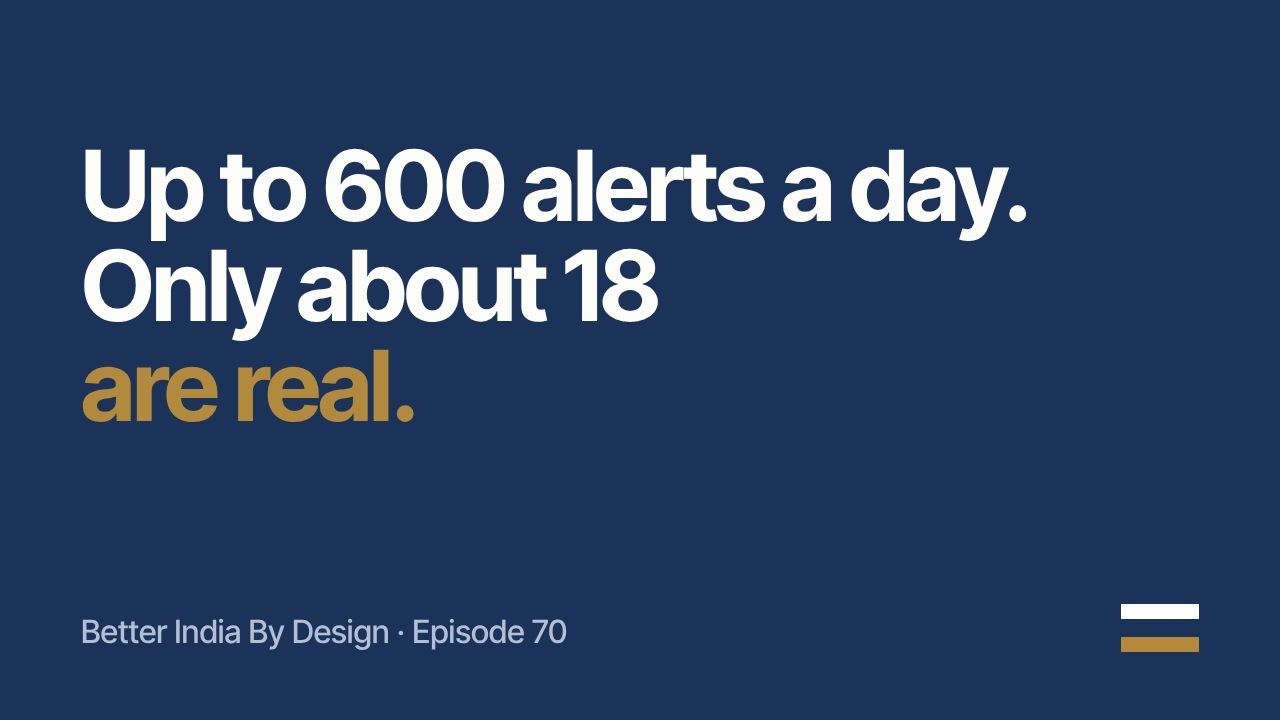
But the alerts already overwhelm the system behind them. Karnataka Transport Department's command centre in Bengaluru receives an estimated 500 to 600 alerts a day, of which only about 18 are genuine distress calls. A bus driver told The News Minute that callbacks stopped after people began pressing buttons at random.
The evidence
Hundreds of bus panic alerts a day, a handful real
Alerts reaching Karnataka Transport Department's command centre in Bengaluru, per day
- All panic alerts (estimate)
- 500–600
- Genuine distress calls (average)
- about 18
Roughly 97% of alerts are not emergencies. Source: The News Minute, citing Deccan Herald and Bangalore Mirror (July 2025).
The News Minute, citing Deccan Herald and Bangalore Mirror, July 2025. See article sources →
Approximate daily estimate and average. Original first bar appears to represent midpoint 550, not an exact observed count.
View original chart →03 · The Perspective
What India has already built
- A national rule. Public service vehicles must carry location trackers and emergency buttons, now enforced through permits.
- Command centres. Karnataka's runs around the clock, with 30 staff across three shifts.
- 112. A single national emergency number for police dispatch.
- Request stops. In Hyderabad, bus drivers are told to stop anywhere a woman asks after 7:30 pm, and a 2026 order in Kerala requires KSRTC buses to stop where night passengers ask.
04 · The Perspective
The first-come, first-served trap
Most command centres work through alerts in the order they arrive. Every bump, every curious child and every device test is treated with the same weight as a woman being followed. The more buttons we install, the longer the queue, and the longer the wait for the one alert that matters.
More hardware without better processing does not make anyone safer. It makes the noise louder.
05 · The BIBD proposal
The Last Stretch
A design to test. Not a claim of achieved outcomes.
We propose the Last Stretch, a layer between the button and the response:
AI Triage reads three signals.
How the button was pressed (a split-second tap or a 5-second hold), how the bus is moving (time, speed, a sudden or unscheduled stop), and a short clip from the onboard camera with every face blurred. No facial recognition, no passenger tracking.
Never delete, only reorder.
No alert is ever discarded; a quick tap might mean someone was silenced. Urgent alerts jump to the top, with the reason in plain words, and a human dispatcher sends police through 112.
Automatic callback for the rest.
Low-probability alerts trigger a call to the bus crew. If nobody answers, the alert's priority rises.
Fix false alerts at the source.
The system shows which buttons and routes cause most accidental presses, so they can be moved, guarded or repaired.
Request stops at night.
Women can get off closer to home after a set hour.
LitCheck.
A city bus's existing dashcam maps dead street lights on its night run, blurring faces and number plates. If a light is dark two nights running, a repair ticket goes to the contractor, and it closes only when a later bus sees the light working.
The idea of using vehicles to map street lights is not new: MIT researchers tested it in 2016 and suggested buses as carriers. India's buses already run every route every night.
06 · Design + AI
What AI can do here, and what it must not
AI can sort hundreds of alerts in seconds, explain why one is urgent, place callbacks and spot dark streets.
It must never delete or close an alert, never dispatch police on its own, and never identify passengers. Camera clips are short, face-blurred and deleted after a set period unless police need them. A human always decides.
07 · A testable next step
Start with one city
A six-month pilot on one city's bus fleet can begin in shadow mode, with the AI scoring alerts silently beside the current queue, then go live with callbacks, request stops and LitCheck on night routes in two wards. Our planning estimate is ₹1 to 2 crore, excluding devices already mandated.
The measures that matter are the time from press to human response for genuine alerts, zero alerts lost, the fall in false alerts after fixing buttons, and the days street lights stay dark on pedestrian routes.
08 · Who must act
What each of us can do
| Passengers | if you need help, press the button and hold it; tell the conductor where you need to get off at night. |
|---|---|
| State transport departments | run AI Triage in shadow mode and publish response times. |
| Bus corporations | fix the buttons that trigger most false alerts, and make night request stops standard. |
| Police and 112 | accept a prioritised feed with reasons. |
| Municipal corporations | accept LitCheck tickets and enforce quick repairs on pedestrian routes. |
| The Ministry of Road Transport and Highways | add response-time standards, not just installation targets. |
09 · The Perspective
Heard over the static
India has done the visible part: buttons on buses, trackers in vehicles, command centres and a Supreme Court order to make them universal. The next step is making sure the one real cry for help is heard first, and that the street is lit when she gets home. An alarm is not a response. A system that sorts the noise is.