01 · The Perspective
Two sides of the same lock
The story below is illustrative. It is not about real people.
A retired couple owns a second flat in a city suburb. It has been empty for three years. They worry a tenant might stop paying, damage the flat or refuse to leave, and that a court case could take years.
Across the city, a young nurse is looking for a room near her hospital. She is turned away by several owners because she is single, from another state or works night shifts. She ends up in a cramped shared room two hours away, paying more than she can afford.
Both would benefit from a fair arrangement. Neither trusts the other enough to try.
02 · The Perspective
Empty homes amid a shortage
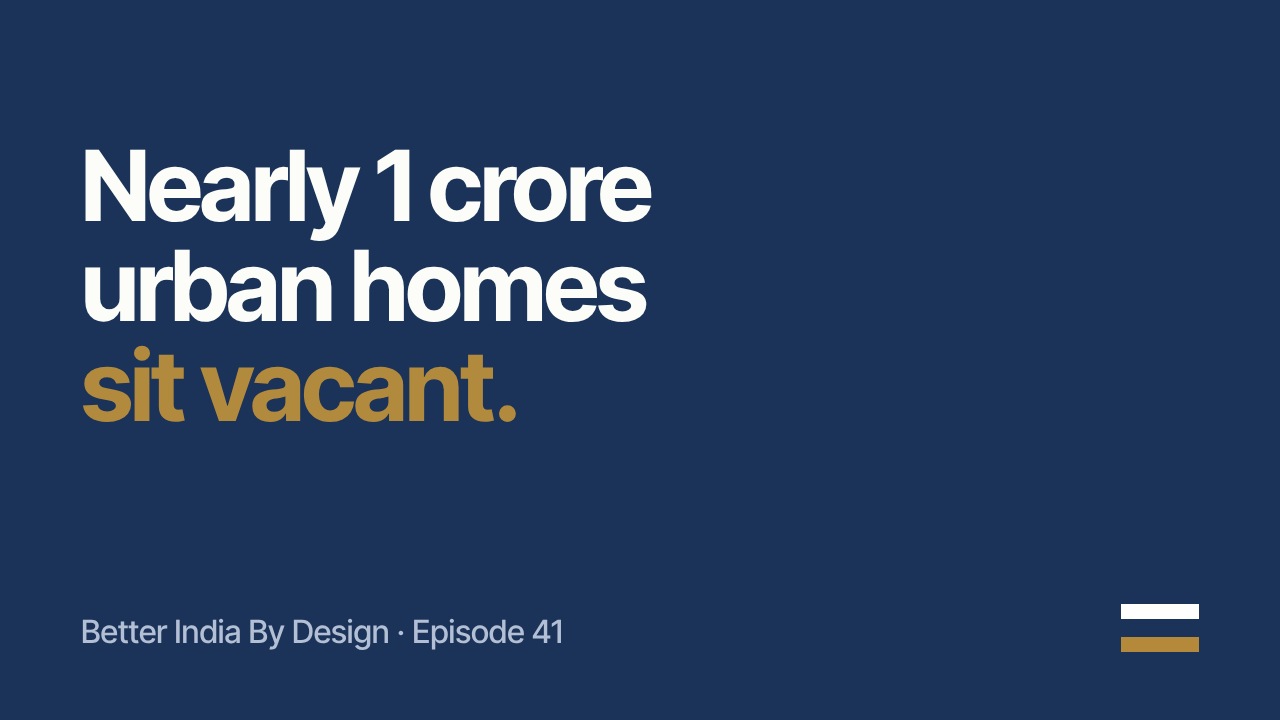
According to NITI Aayog's report A Comprehensive Framework to Promote Affordable Housing, summarised by The Policy Edge in January 2026, nearly 1 crore completed urban houses are unoccupied. Rental yields are typically 2 to 3%. The urban housing shortage is estimated at 3 to 7 crore units.
Building more homes is part of the answer. Unlocking homes that already exist is faster, if owners and tenants can trust the arrangement.
03 · The Perspective
More is in place than most owners and tenants know
- The Model Tenancy Act, 2021. A central model law for rent authorities, clear agreements and fast dispute resolution, which states can adopt.
- PMAY-U 2.0. Includes affordable rental housing for urban migrants and the poor.
- Rent authorities and courts. Several states have set up rent authorities to handle disputes.
- Online agreement registration. Some states allow rental agreements to be registered online.
04 · The Perspective
Where trust breaks
- Owners fear disputes and slow courts.
- Tenants fear discrimination and lost deposits.
- Agreements are unclear about repairs, rent increases and exit.
- Nobody records the flat's condition at move-in, so deposits become disputes.
- Rent is compared, true cost is not. Commute time and cost are ignored.
05 · The BIBD proposal
The redesign: a Rental Dignity OS
A design to test. Not a claim of achieved outcomes.
A Rental Trust Passport for tenants and owners, showing verified identity and past tenancy record, shared by consent.
True housing cost, including commute, so tenants can compare homes honestly.
Job-to-home fit, matching workers with homes near where they work.
Clear agreements and a move-in evidence record, with photos and a checklist both sides sign.
Deposit protection and clear maintenance responsibility, with deposits held safely and returned on time.
06 · Design + AI
Where AI helps, and where people decide
AI can compare true housing costs, explain agreements in plain language and suggest fair rents.
It must not profile or exclude tenants by religion, caste, origin, gender or occupation. Owners and tenants make their own choices within the law.
07 · A testable next step
Start with one city
One city can pilot Rental Trust Passports, standard agreements, move-in records and deposit protection with a rent authority and a few housing platforms for a year. Our planning estimate is ₹60 lakh to ₹1 crore.
The measures that matter are vacant homes rented, disputes filed and resolved, deposits returned on time and tenants' commute times.
08 · Who must act
What each of us can do
| Owners | use a registered agreement and a move-in record, and consider renting out an empty home. |
|---|---|
| Tenants | record the flat's condition at move-in and pay rent digitally. |
| State housing departments | adopt tenancy laws based on the Model Tenancy Act and set up fast rent authorities. |
| The Ministry of Housing and Urban Affairs | track vacant homes and rental supply in PMAY-U 2.0. |
| Proptech platforms | build fair, non-discriminatory tools. |
09 · The Perspective
Unlocking homes that already exist
India's housing problem is not only about building. It is about trust. When owners and tenants can rely on fair, fast rules, empty homes and people who need them can finally meet.